wild vähäheikkilä
Turku, Finland
2025
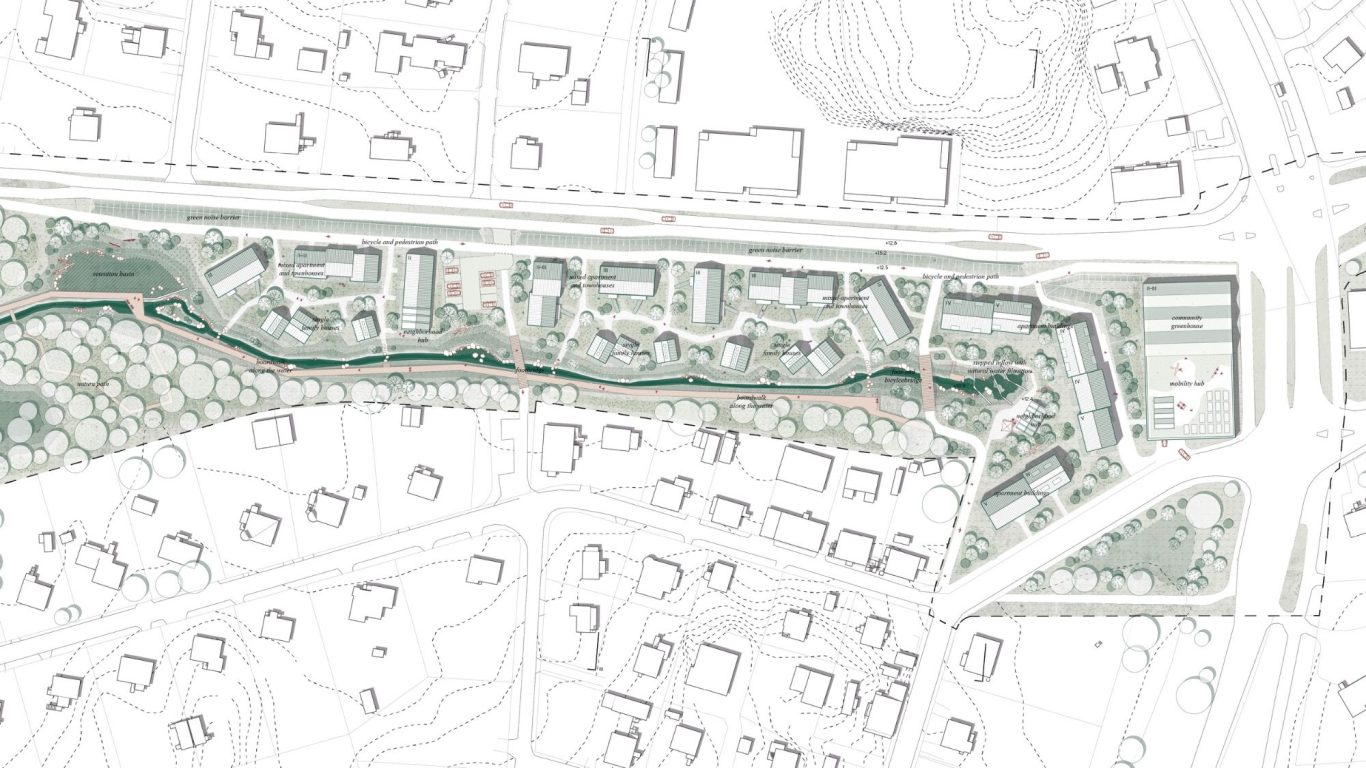
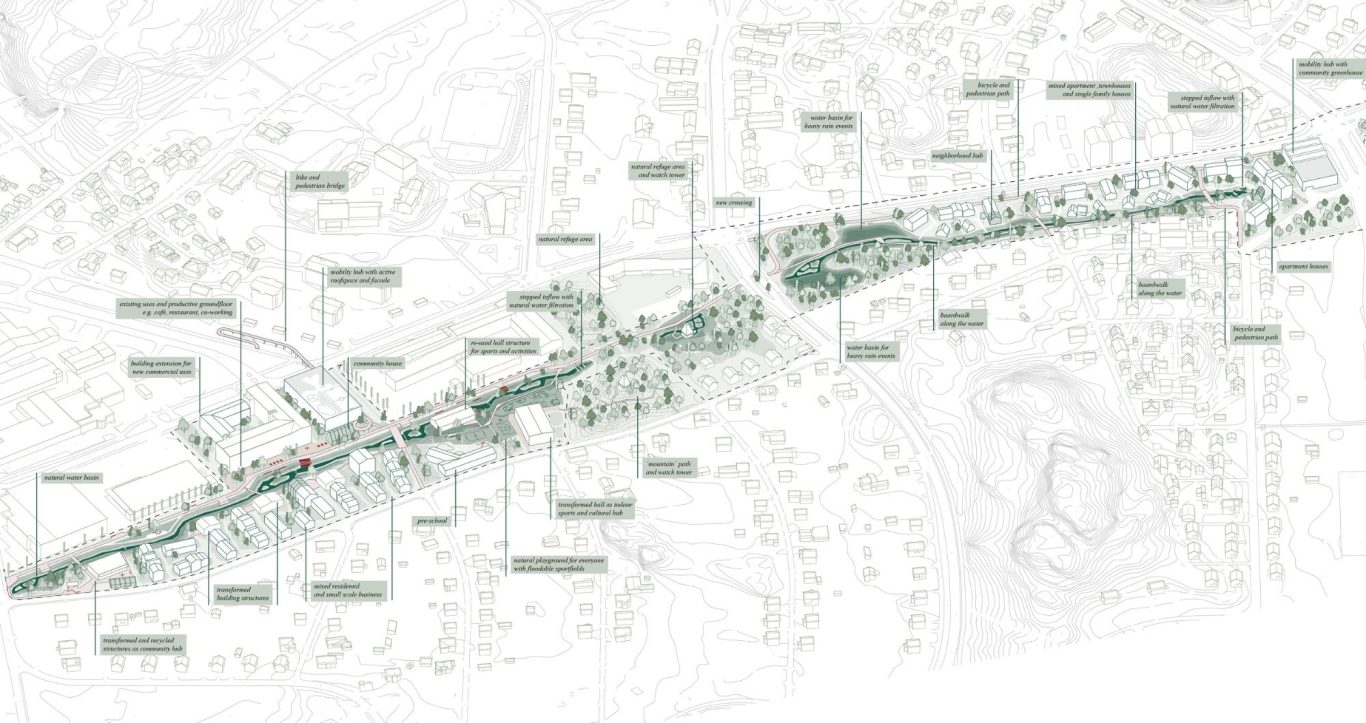
Cities are living organisms with a history - characterized by fractures, layers and transformations. Particularly in fragmented urban spaces like Vähäheikkilä, where different uses, layers of time and infrastructural caesuras come together, intermediate spaces often emerge that are perceived as empty spaces or functional residual areas. However, it is precisely these resources of the city that have the potential to act as connecting element - not by being reshaped, but by a deliberate landscape repair that recognizes and reinterprets the character of the location.
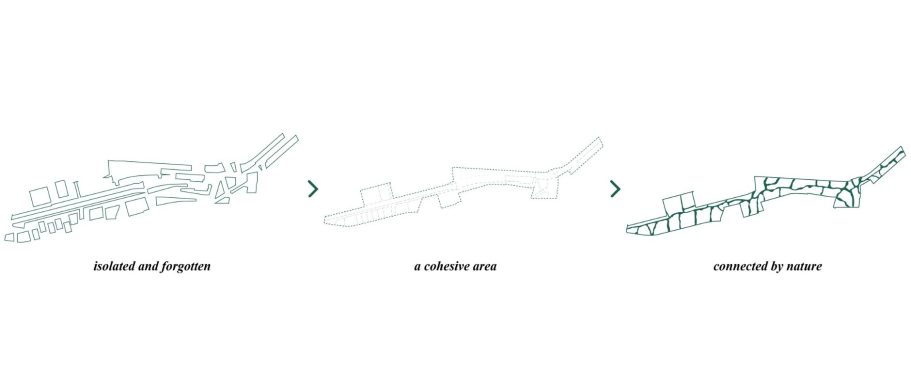
wild vähäheikkilä pursues the idea of ecologically oriented urban repair, inspired by the Japanese principle of Kintsugi: what was once broken or damaged is not hidden, but reconnected with care and appreciation - in a way that makes the break visible and at the same time creates a new beauty and identity.
what is wild? In the context of current ecological challenges, a new understanding of urbanity is taking center stage: the recognition of the city as a habitat for more than just people. Wild urban nature does not stand for anarchy, but for natural self-organization, co-evolution and resilience.
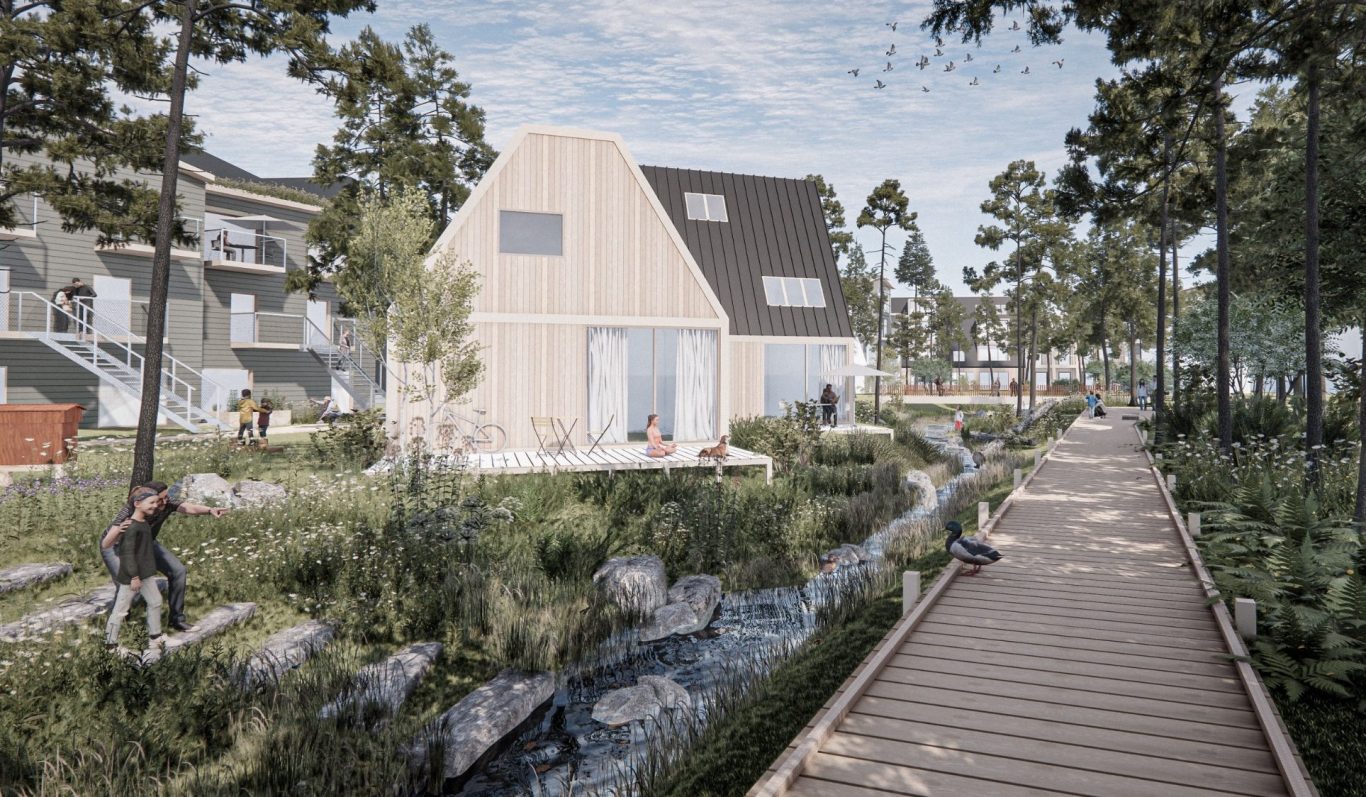
Urban space is no longer designed exclusively by humans, but is shaped in coexistence with other forms of life - with plants, animals, water and soil. Wild urban nature does not mean a return to “pure” nature, but the integration of natural processes into the urban fabric - as a co-creator, as part of a shared future. The transformation of the canalized stream, not as a pure infrastructure project, but as a living dynamic organism gives rise to new urban qualities. Water is not controlled here, but accompanied. It becomes the engine of ecological, spatial and social renewal.
The following three principles frame this approach.
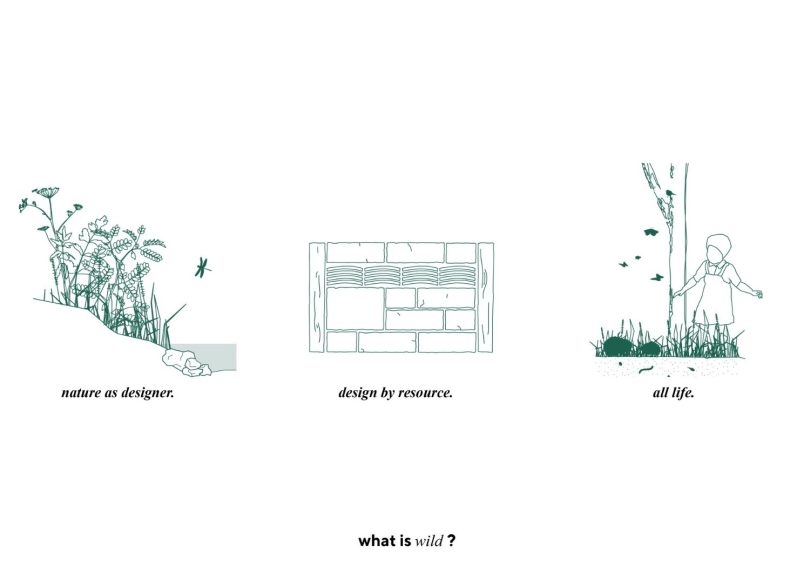
nature as designer. Urban planning often begins with a plan - an idea of order, function and form. The wild approach challenges this. It begins with understanding: What does this place itself want to become? What processes are already in progress, what traces are legible? Growth, erosion, flooding, settlement by plants or animals - all of these are creative forces. The task of the design is to accompany them, not to determine them. The uncovering of the stream thus becomes a choreography of uncertainty: its edges are not drawn hard, but left soft; its course is not finally drawn, but developed in dialog with the terrain. Vegetation is allowed to settle, migrate and disappear. The space remains in flux - incomplete, open, alive.
all life. Wild recognizes that urban spaces are habitats for many - and that a future worth living can only be conceived in coexistence. Urban development here becomes the art of living together: people, animals, plants, microorganisms - they all shape and use the space. This means: islands of vegetation instead of ornamental lawns, deadwood as a habitat instead of garbage, light and shade zones in which a wide variety of life forms can thrive. The built environment also becomes part of this symbiosis - with nesting aids, façade greening, water catchment systems and open ground.
This creates new urban ecosystems - not as a substitute for nature, but as an extension of our understanding of the city.
design by resource. Wild also means avoiding over-forming. Instead of bringing in resources from outside, the design is based on what is available locally - both materially and immaterially. Existing vegetation, soils, watercourses, microclimates or old pathways are not erased, but integrated. Structural interventions are sparing, selective and resource-conserving. This approach promotes a new aesthetic: rough, fragmentary, organic. It is not about perfection, but about meaningfulness. In such a design, new forms of housing are created that adapt to the terrain - with a view of water, permeable transitions to the outside space, communal areas that blur with the natural space. The place sets the rhythm - not the norm.